Functions for cultural institutions

What artwork connects in everyday work.

Inventory, calendars, space scheduling, projects, shift planning, budgets, BI, tasks, CRM and contracts draw on one shared data foundation.

Eight functional areas

Introduce them individually and connect them when useful.

Use the areas that fit your organisation. Each deep dive covers typical key-user workflows and links to the detailed documentation.

Every function is part of artwork, with no additional licence fee per module.

01

Inventory, collections & equipment

Stock, availability, location and condition remain visible throughout the equipment process.

In short

  • Stock and individual assets with custom properties
  • Time-based scheduling with overbooking warnings
  • Equipment issues, returns and external loans
  • Kits, baskets, status and a complete change log

Typical key users

Technical managementWarehouse & logisticsProductionWorkshops
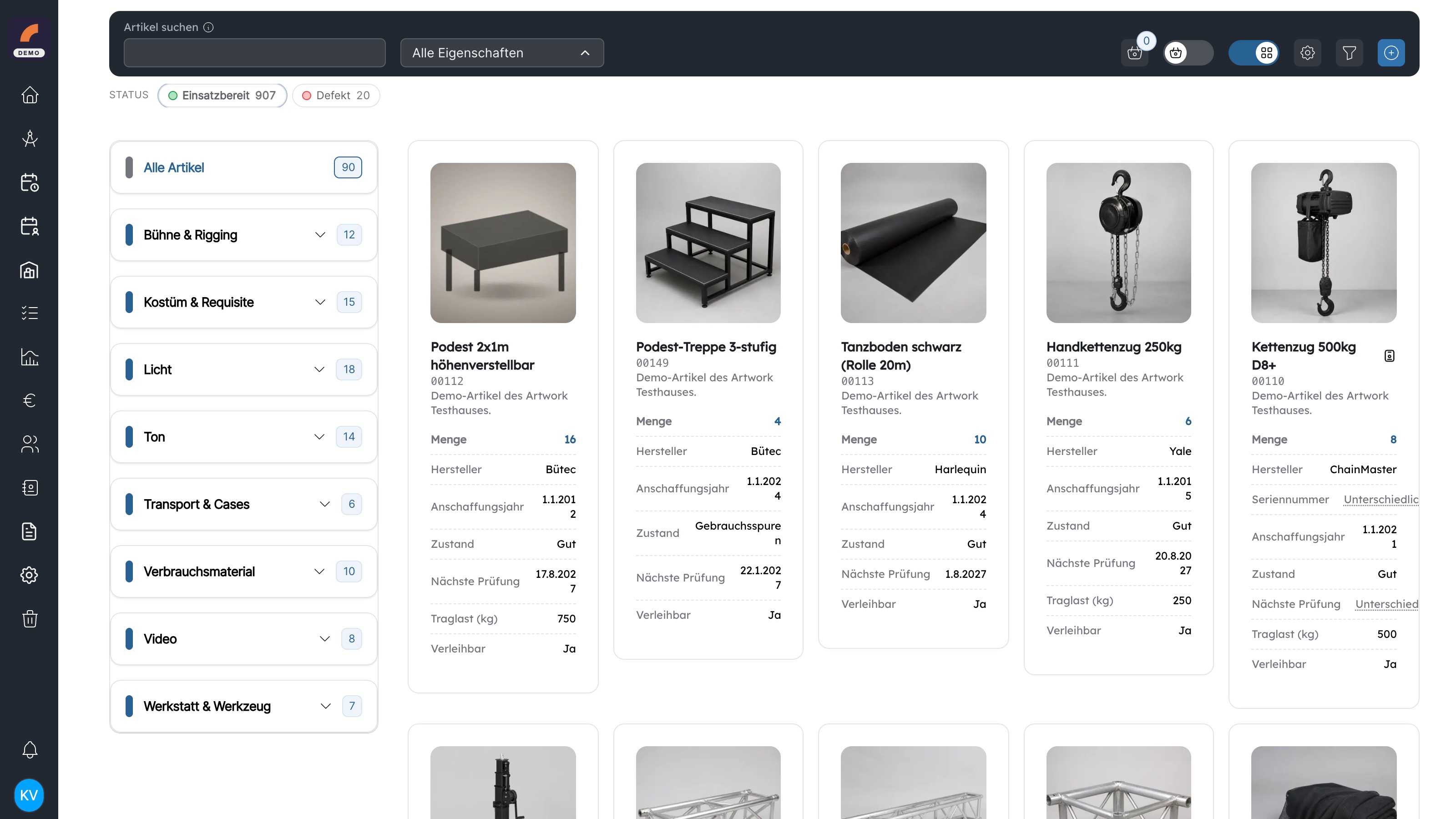
Inventory overview in artwork with categories, article images and properties in the tile view
View from the artwork test instance
Explore practical workflows
  1. 01

    Schedule equipment for a production

    Select a period and see the available quantity for every item. Reservations from other projects are included immediately, while negative stock flags a conflict.

  2. 02

    Prepare an equipment issue

    Collect items and kits in a basket, assign them to a project or person and create an issue. Record quantities, condition and deviations when equipment returns.

  3. 03

    Track individual assets

    Serial number, location, status, images and custom properties stay with the individual object. Its log records what changed, when and by whom.

  4. 04

    Handle external loans

    Equipment leaving the organisation remains in the same process. Loan note, period, recipient and return stay connected to the inventory.
Full documentation
02

Calendars & space scheduling

Bring rehearsals, performances, setups, rentals and blocked periods together across every space.

In short

  • Space occupancy across days, weeks or custom periods
  • Provisional planning and confirmed events
  • Booking rights, space requests and approvals
  • Personal filters, exports and calendar feeds

Typical key users

SchedulingProduction managementSpace ownersTechnical teams
View from the artwork test instance
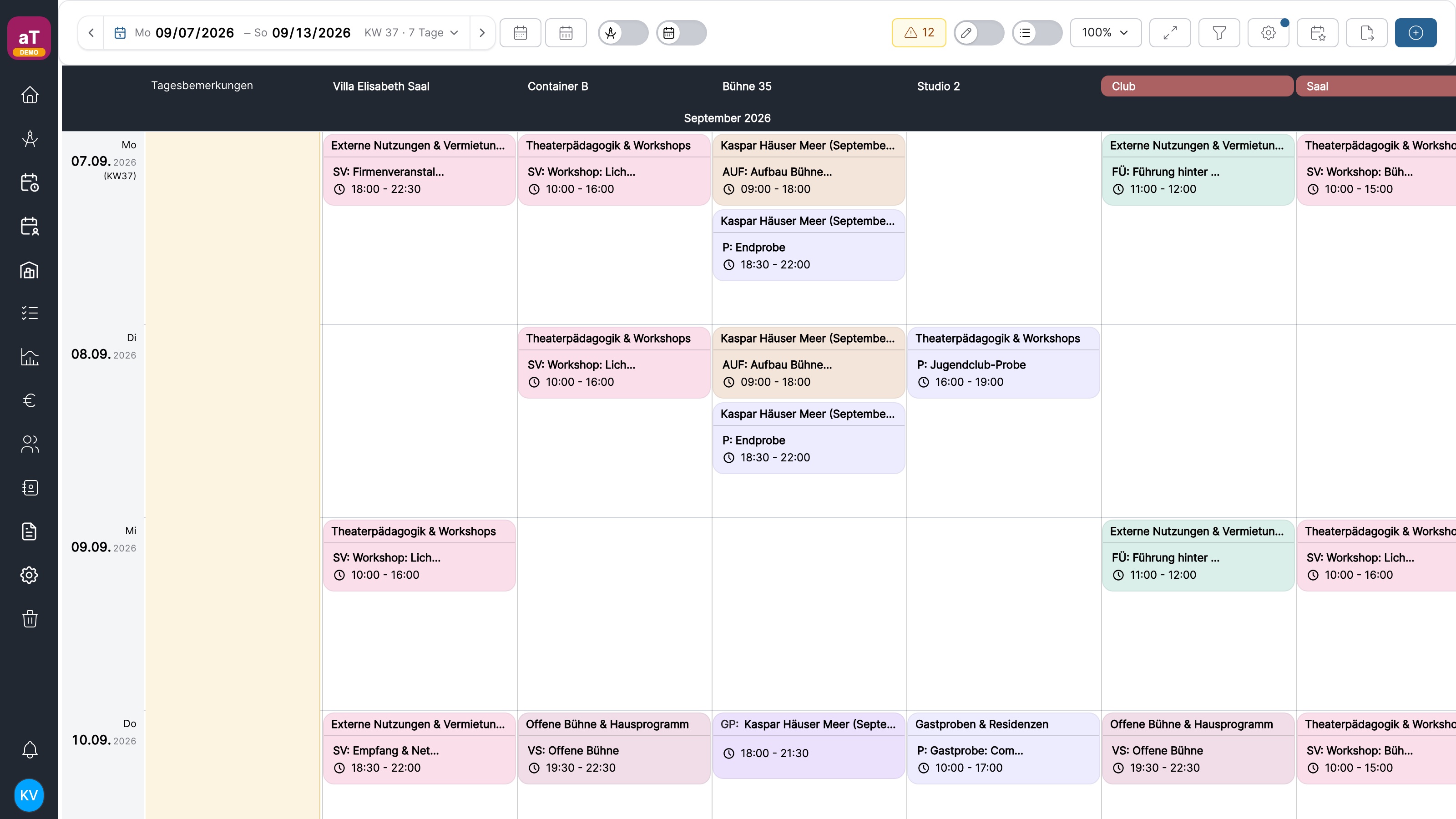
Space calendar in artwork with rooms as columns and events in a daily grid
View from the artwork test instance
Explore practical workflows
  1. 01

    Plan a rehearsal across spaces

    Check availability, create the event directly in the space grid and connect it to a project. Repetitions and multi-day schedules can be edited together.

  2. 02

    Coordinate provisional dates

    Early ideas remain in the planning calendar. Move them into the confirmed calendar once timing, space and responsibilities are clear.

  3. 03

    Approve space requests

    Space owners receive requests with the relevant project context. They can approve, decline or clarify details directly on the event.

  4. 04

    Subscribe to a personal calendar

    Users filter the spaces and event types they need. Personal views can be subscribed to through ICS or exported to PDF and Excel.

Full documentation
03

Projects & builder

Give projects the structure your organisation needs: teams, dates, data, tasks, documents and specialist areas.

In short

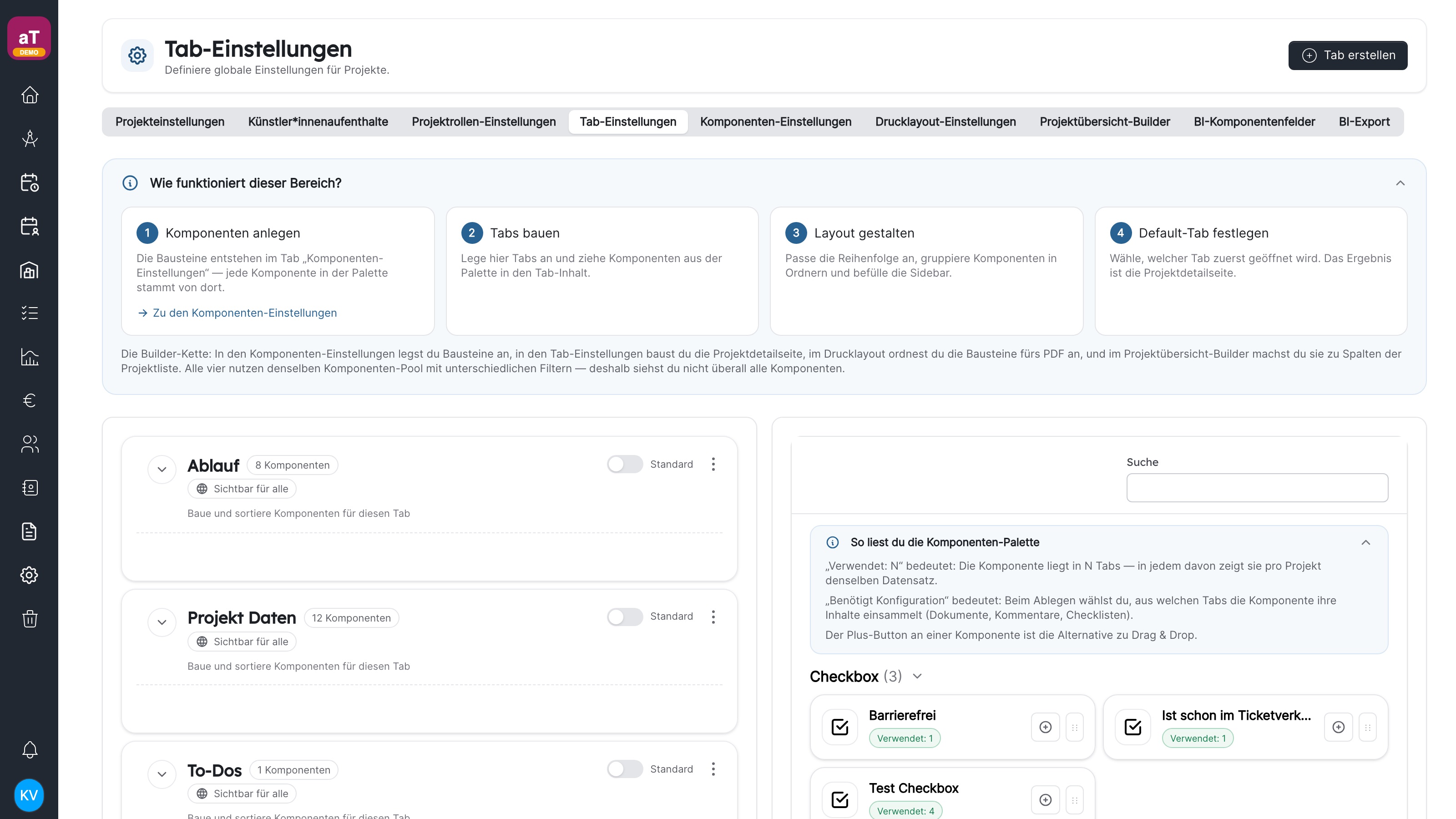
  • Configurable tabs, components and templates
  • Project teams with roles and precise permissions
  • Custom fields, lists, comments and documents
  • Project groups, history, print views and exports

Typical key users

Production managementSchedulingProject adminsAll departments
View from the artwork test instance
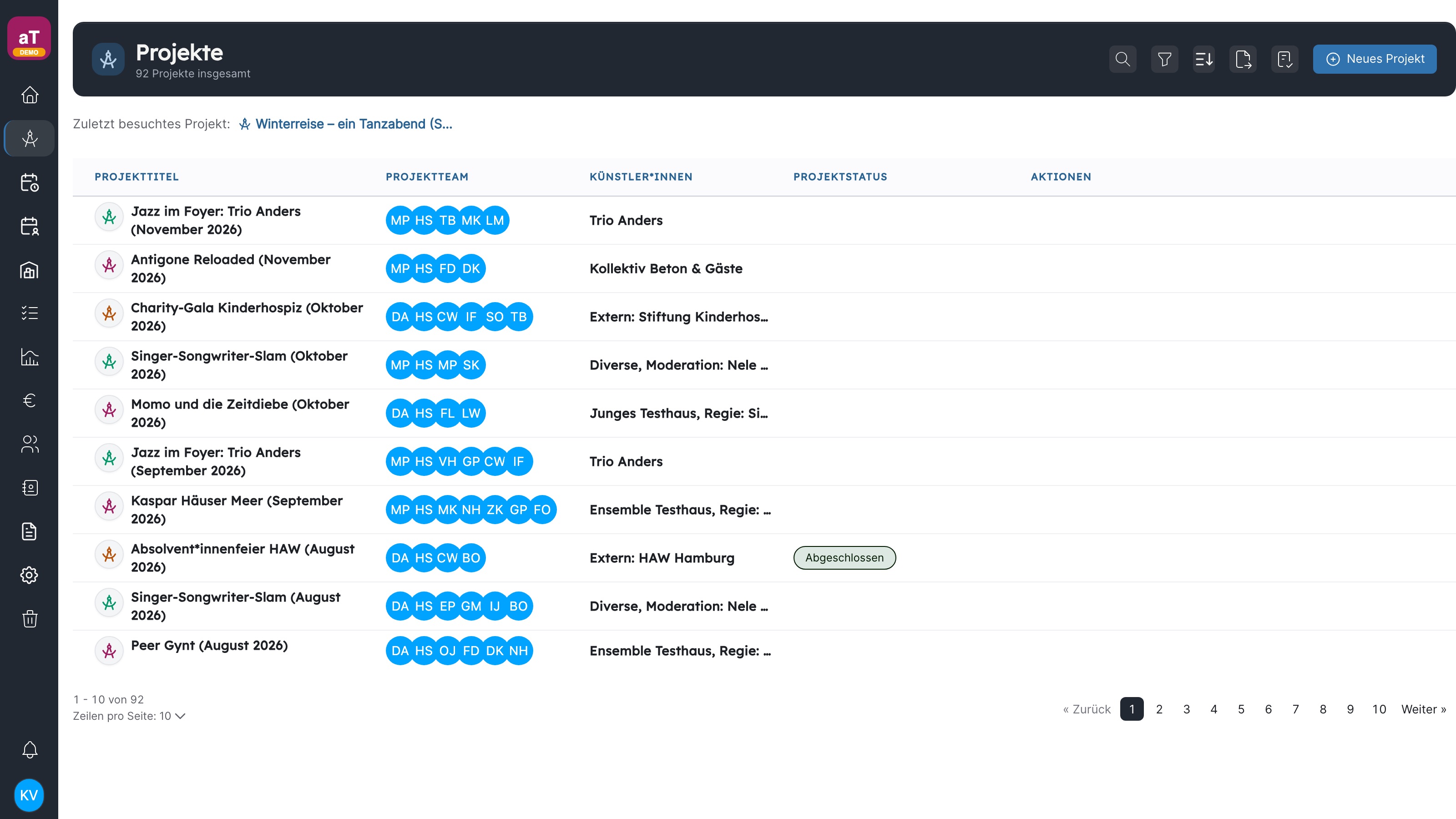
Project overview in artwork with teams, artists and different project statuses
View from the artwork test instance
Explore practical workflows
  1. 01

    Set up a new production

    Start from a template, define dates and status and assemble the project team. The relevant tabs and checklists are immediately ready.

  2. 02

    Bring departments into one project

    Technical, communications, production and administration teams maintain their own areas. Permissions can reach individual components and project roles.

  3. 03

    Adapt the builder to your organisation

    Admins compose tabs from fields, selects, tables, tasks, calendars, budgets, shifts and other functional components, then reuse them as templates.

  4. 04

    Trace changes and decisions

    Comments, notifications and project history record what changed. Configurable print views support meetings and handovers.

Full documentation
04

Shift planning

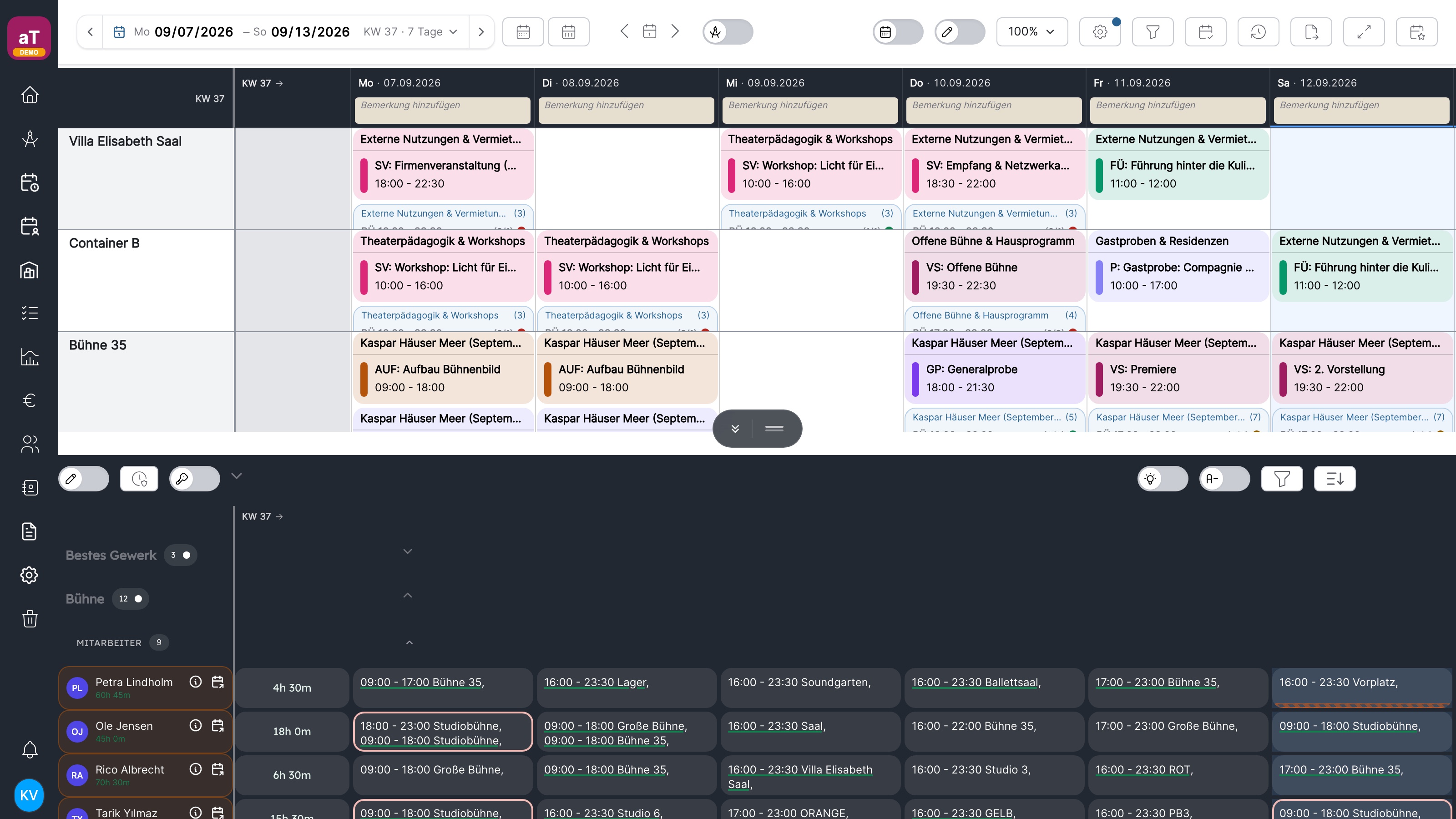
Create shifts around actual events and spaces while accounting for qualifications, availability and working-time models.

In short

  • Demand by team, qualification and shift template
  • Assignment with availability and conflict checks
  • Working time, contract hours and time accounts
  • Approvals, commitments and personal rosters

Typical key users

Roster plannersTeam leadsHREmployees
View from the artwork test instance
Shift plan in artwork with events, shifts and time accounts for all employees in a weekly overview
View from the artwork test instance
Explore practical workflows
  1. 01

    Derive staffing demand from an event

    Add required teams, times and qualifications to an event. Shift templates speed up recurring setups, performances and front-of-house duties.

  2. 02

    Assign suitable employees

    See qualifications, availability and potential conflicts while assigning people. Open positions and overbooking remain clearly visible.

  3. 03

    Make a roster binding

    Planning states can be reviewed, approved and committed for a period. Later changes remain traceable and trigger targeted notifications.

  4. 04

    Keep working time in view

    Contract models, target hours, breaks, leave, absences and time accounts inform planning. Employees see and subscribe to their personal roster.

Full documentation
05

Budgets & funding

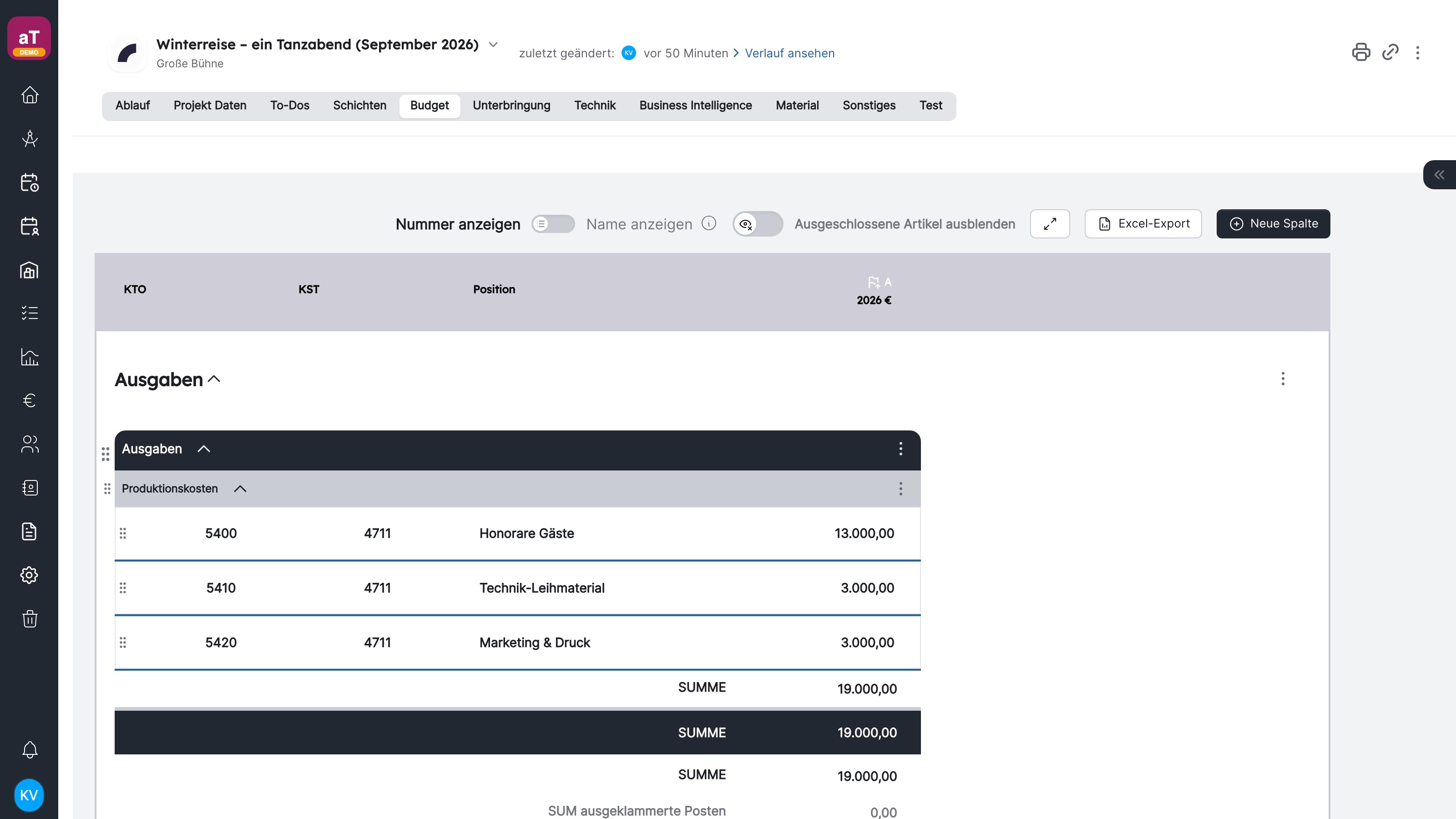
Structure project budgets around your accounts and responsibilities, then connect them with funding sources.

In short

  • Flexible budget tables with custom columns
  • Templates, review states and committed figures
  • Funding across projects and periods
  • Sage imports, project groups and Excel exports

Typical key users

Project controllingAdministrationProduction managementManagement
View from the artwork test instance
Project budget in artwork with accounts, cost centres, positions and yearly columns
View from the artwork test instance
Explore practical workflows
  1. 01

    Create a budget from a template

    Reuse the appropriate cost structure and add project-specific positions. Columns can represent years, planning states or custom calculations.

  2. 02

    Coordinate figures across teams

    Positions can be reviewed, verified and committed, making it clear which numbers are still being worked on and which are binding.

  3. 03

    Allocate funding

    One funding source can cover several projects and budget positions. Keep approval, period, restrictions, files and committed funds together.

  4. 04

    Import accounts and report

    Sage data can flow into project budgets. Project groups, totals and Excel exports support further analysis.

Full documentation
06

Business intelligence

Turn production data into metrics for programme, attendance, revenue and internal effort.

In short

  • Audiences, income, occupancy and performances
  • Seasons, calendar years and custom periods
  • Comparisons by production and category
  • Data-quality checks and configurable exports

Typical key users

ManagementControllingProgramme leadsProject admins
View from the artwork test instance
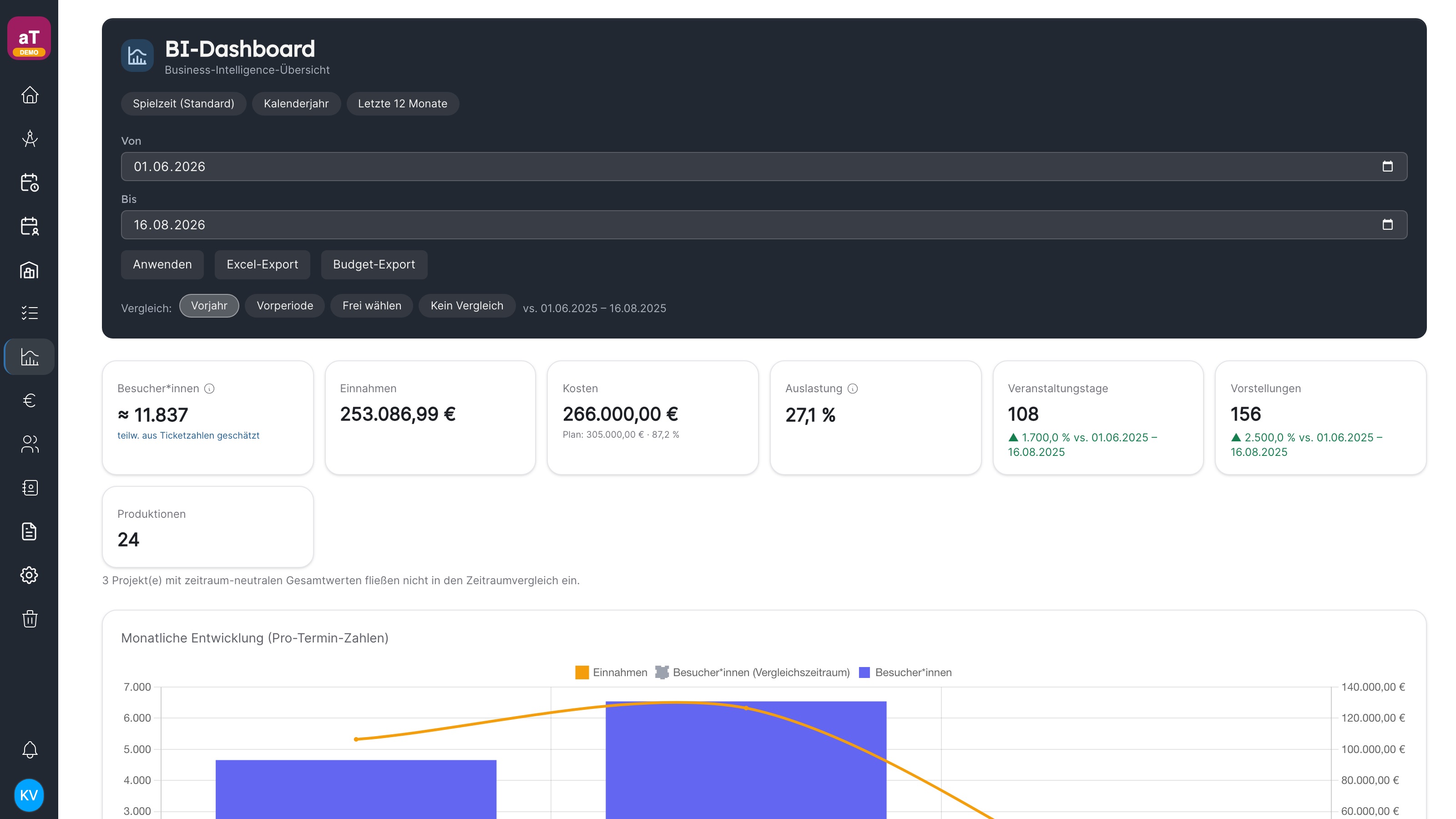
BI dashboard in artwork with period filters and metrics for audiences, revenue and occupancy
View from the artwork test instance
Explore practical workflows
  1. 01

    Review a season

    Choose a season, calendar year or custom period. The dashboard calculates audiences, income, occupancy, event days and productions.

  2. 02

    Compare productions

    Tables and charts reveal differences between productions and categories, bringing effort, revenue and output into one view.

  3. 03

    Find data gaps before reporting

    artwork flags projects that contain events but no BI figures. Responsible users can jump directly into the affected project.

  4. 04

    Export data for further analysis

    Fields and export presets can match reporting requirements. Excel outputs support recurring reports and additional analysis.

Full documentation
07

Tasks & collaboration

Keep tasks, checklists and notifications connected to the project they belong to.

In short

  • Personal and shared task lists
  • Templates with deadlines relative to project dates
  • Assignees, status and targeted notifications
  • Comments, history, email and push settings

Typical key users

Production managementProject teamsCommunicationsAll employees
View from the artwork test instance
To-do lists in an artwork project with deadlines, assignees and completed tasks
View from the artwork test instance
Explore practical workflows
  1. 01

    Prepare recurring production tasks

    Build a checklist template. Deadlines can follow project start, premiere or another reference date automatically.

  2. 02

    Distribute work across a team

    Give each to-do an assignee, description, deadline and status. Everyone also sees their own open tasks on the dashboard.

  3. 03

    Respond to changes

    The notification centre collects relevant updates, with many items opening or supporting an action directly.

  4. 04

    Record project conversations

    Comments and history give decisions a fixed place. Personal email and push preferences control which notifications leave artwork.

Full documentation
08

CRM, documents & contracts

Connect contacts and documents where teams need them throughout the project.

In short

  • Custom contact types, fields and access groups
  • Project links for contacts, contracts and documents
  • Document requests and contract components
  • CSV/Excel imports, files and follow-up tasks

Typical key users

Contract managementProductionHRAdministration
View from the artwork test instance
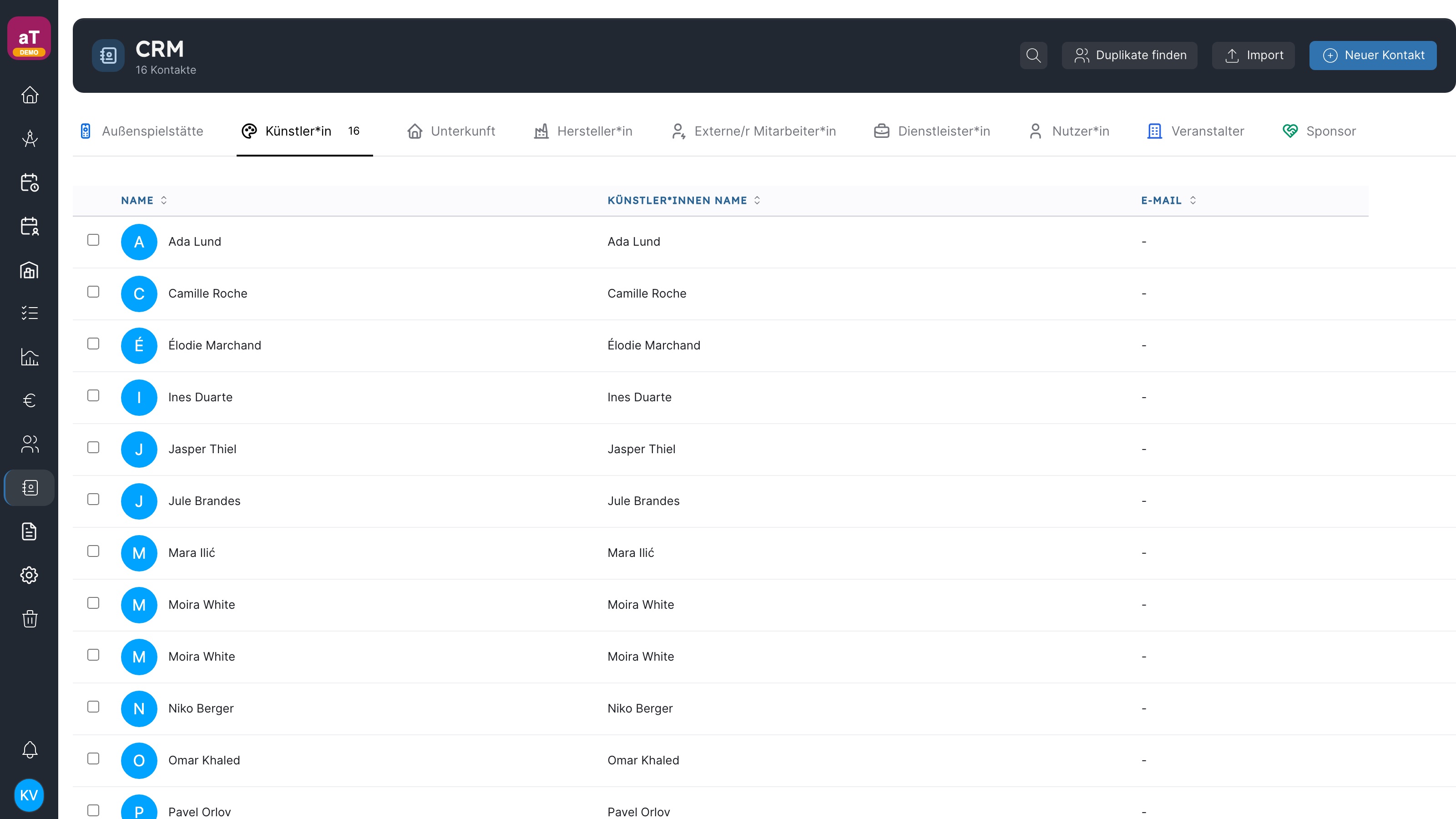
CRM in artwork with contact types, search and import controls
View from the artwork test instance
Explore practical workflows
  1. 01

    Import contacts from existing lists

    Import CSV or Excel records and assign a contact type. Custom fields capture the information your organisation actually maintains.

  2. 02

    Connect contacts with productions

    Select artists, venues, accommodation and providers directly in a project. Updates to the central contact remain current everywhere.

  3. 03

    Organise contracts and follow-up work

    Contracts carry project and contact links, files, status and configurable components. Follow-up tasks can arise from the process.

  4. 04

    Request missing documents internally

    Send a document request to the responsible person and follow its status. Submitted files arrive in the intended context.

Full documentation

Data exchange, migration & exports

artwork remains part of your IT landscape.

Interfaces, imports and configurable outputs connect artwork with existing systems. The right combination is agreed for each organisation.

01

Interfaces

Existing integrations cover central handovers. The open architecture allows further interfaces to be added when needed.

  • Open API endpoint for inventory data
  • Active Sage integration for accounting data
  • OIDC/SSO plus LDAP and Active Directory
02

Import & migration

Contacts can be imported directly from CSV or Excel. Complete migrations are planned around the structure of the existing data.

  • CRM imports from prepared files
  • Migration from legacy systems and custom databases
  • Any file format after a joint assessment
03

Exports & subscriptions

Information leaves artwork in formats that teams, boards and external partners can continue to use.

  • PDF and Excel for staffing, spaces, budgets and projects
  • Configurable templates and standardised BI exports
  • One-way calendar subscriptions via ICS
Example output / PDFartwork

Space schedule

Week 21 · Monday to Sunday

Time
Hall
Studio
Foyer
09:00
Set-up
Rehearsal
14:00
Rehearsal
Workshop
Delivery
19:30
Performance
Doors
View from the artwork test instance

Explore artwork for your organisation

Bring a workflow you would like to organise better.

During the demo, we map your questions to the relevant areas and show those functions directly in artwork.

  • Discuss one of your workflows
  • Explore the relevant modules
  • Clarify rollout and operations